Everything you need to know about your day’s skiing at the Skiliftkarussell Winterberg:
find out more about snowmaking, sustainability and nature conservation, and slope maintenance, and learn about the Bergwacht and ski patrol, as well as the FIS rules for safe behaviour on the slopes.
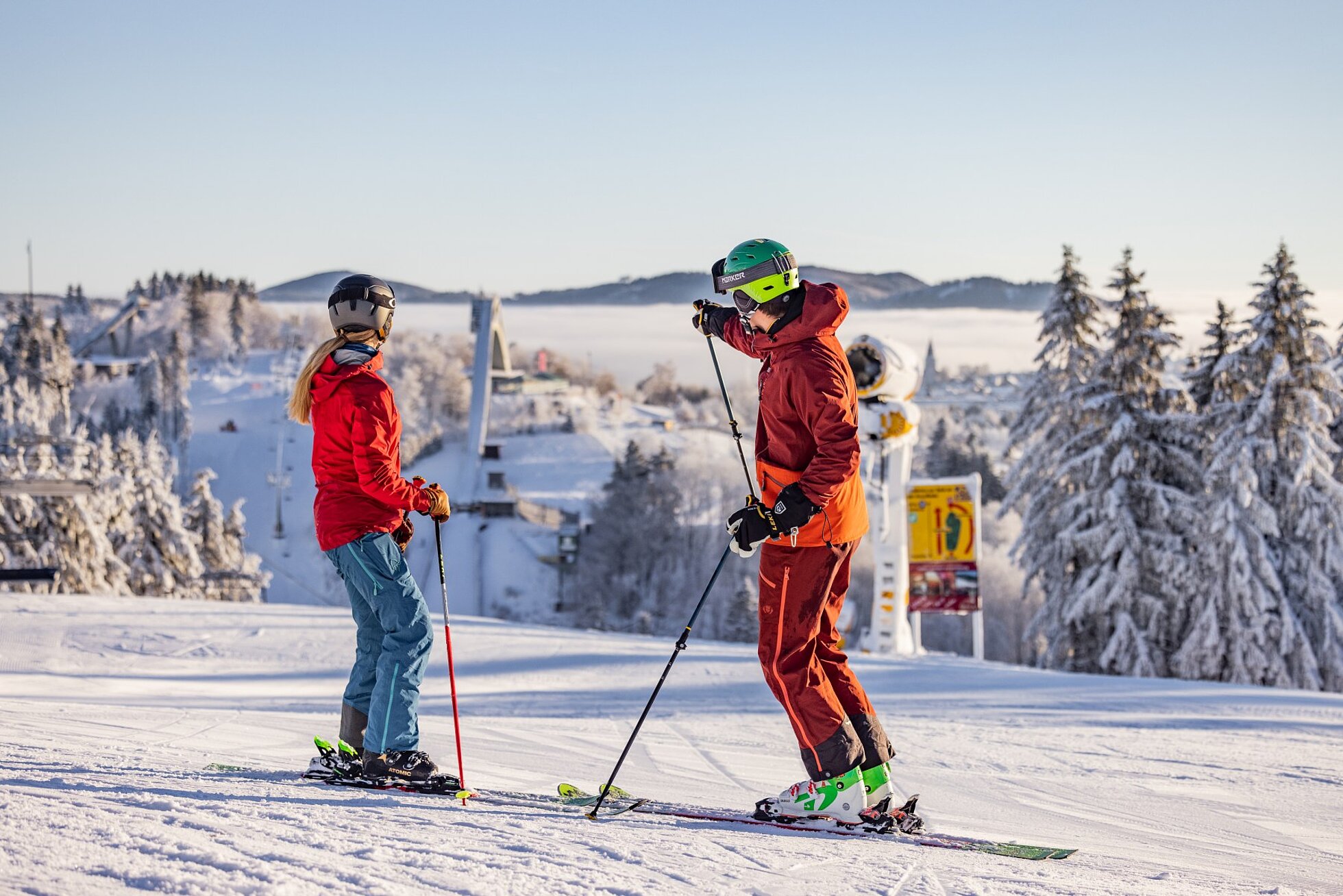
When Frau Holle needs a helping hand, up to 360 snow-making machines at the Skiliftkarussell Winterberg ensure ideal conditions for winter sports. A total of 29 runs – 26 ski slopes and three toboggan runs – with a combined length of around 27 kilometres can be covered with artificial snow. The only exceptions are the Nordhang and the slopes at Herrloh.
In the snowmaking process, water is turned into snow – after the snow melts, it returns to the natural water cycle. A photovoltaic system at Remmeswiese also supplies part of the energy required.




Sustainability & Nature Conservation
Responsibility for nature and the regionWinter sports and nature go hand in hand in Winterberg. That is why the Skiliftkarussell is constantly working to use resources efficiently, reduce energy consumption and preserve the unique landscape surrounding the ski resort.
This involves a wide range of measures: from renewable energy and modern lift and snowmaking technology, through the responsible use of water, to the conservation of the species-rich mountain meadows. The aim is to ensure that winter sports, nature and the region’s development are harmonised with one another in the long term.
Here’s what we can do...
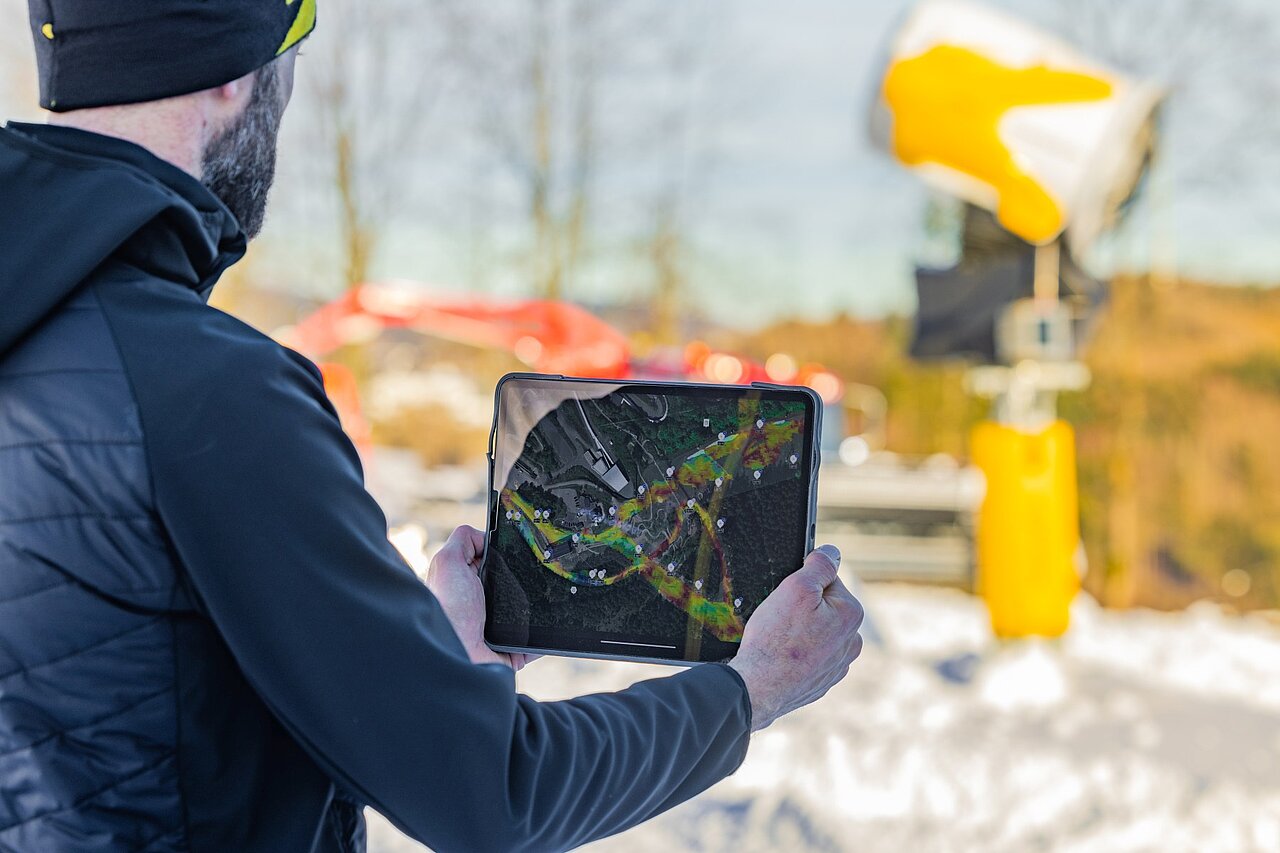
Renewable energy
Photovoltaic systems generate electricity directly within the ski resort. At Remmeswiese, the energy produced is used, amongst other things, to power the snowmaking equipment. Other suitable roof areas are also utilised for photovoltaic systems.
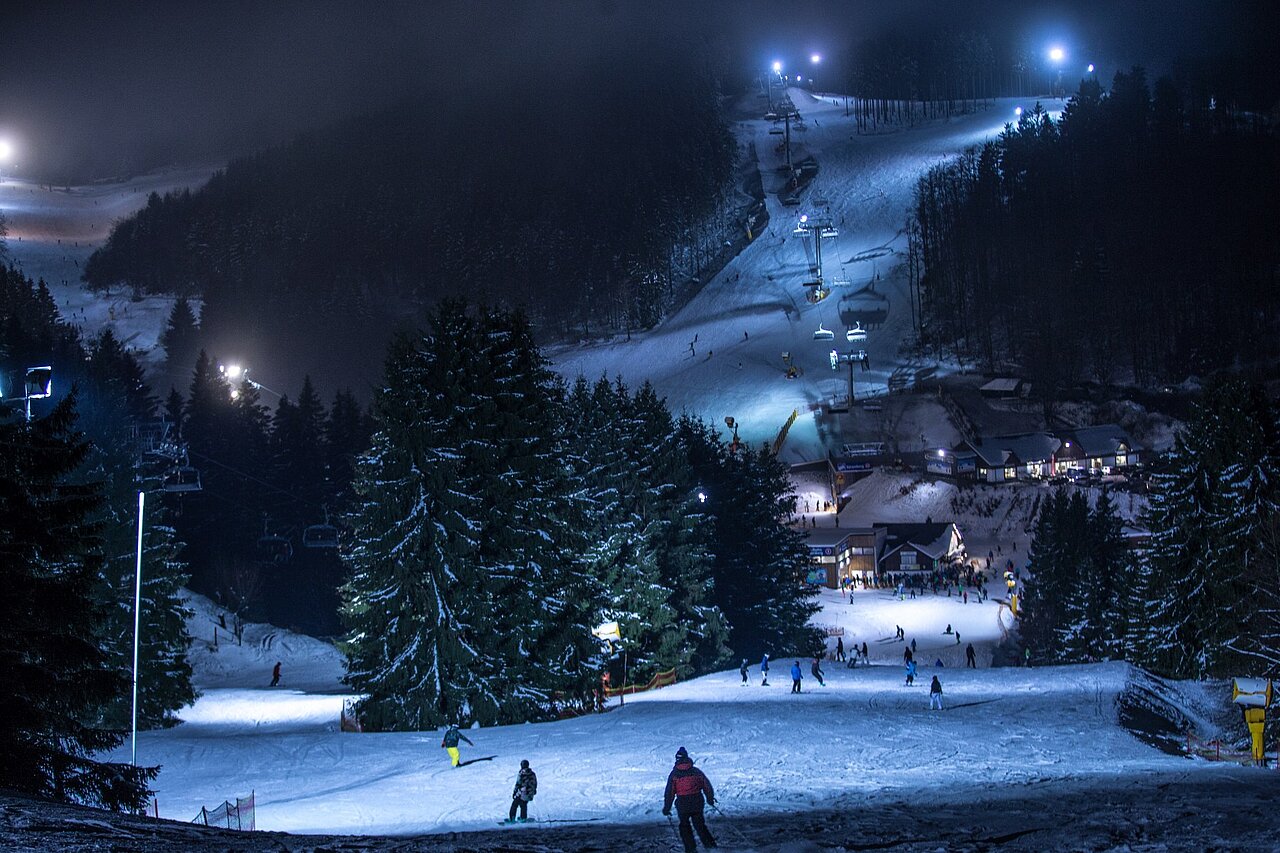
Using energy efficiently
Modern technology helps to use energy more efficiently. This includes LED technology for floodlights, energy recovery in lift systems and snow depth measurements accurate to the centimetre, ensuring that snow is produced only where it is actually needed.
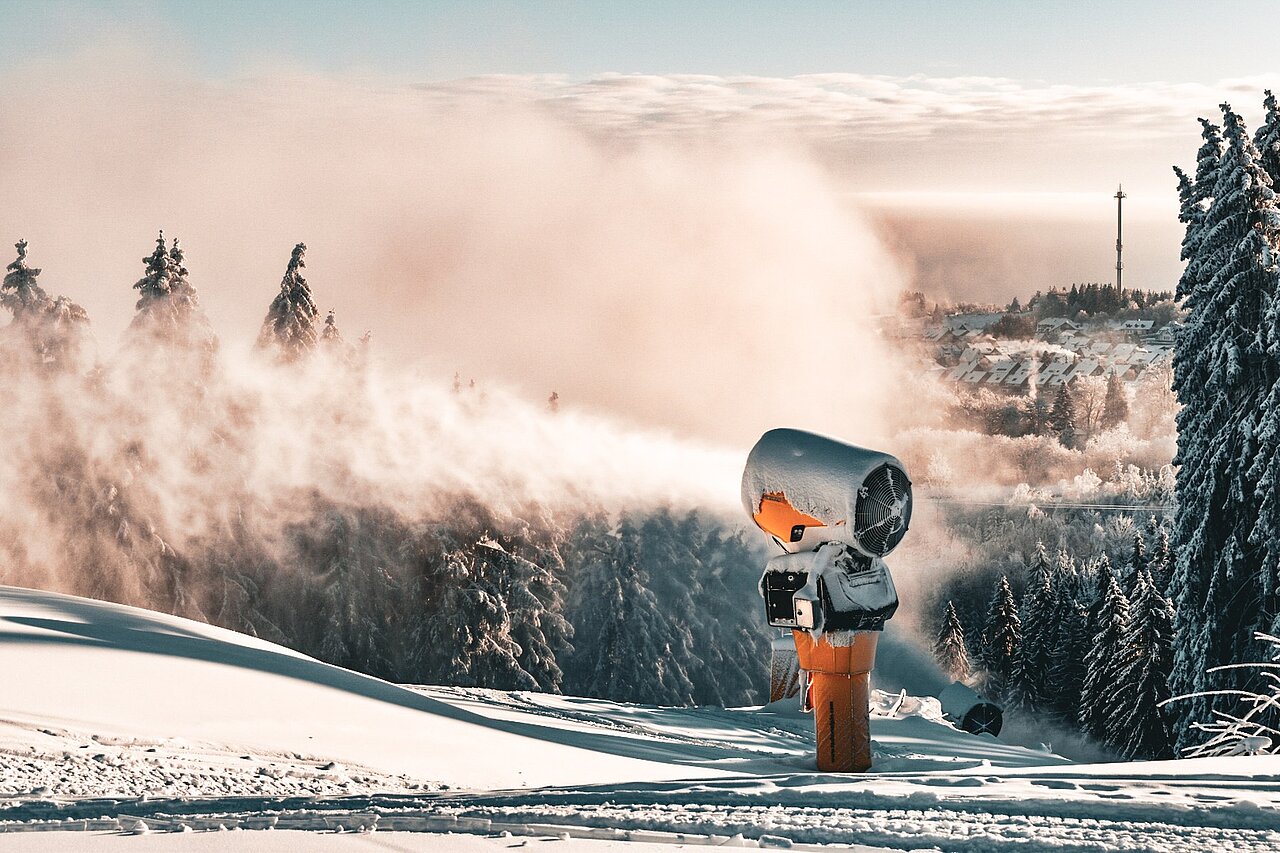
Water in the cycle
Six reservoirs with a total capacity of around 190,000 m³ provide water for the artificial snowmaking system. When the snow melts, the water returns to the natural water cycle.
Preserving species-rich mountain meadows
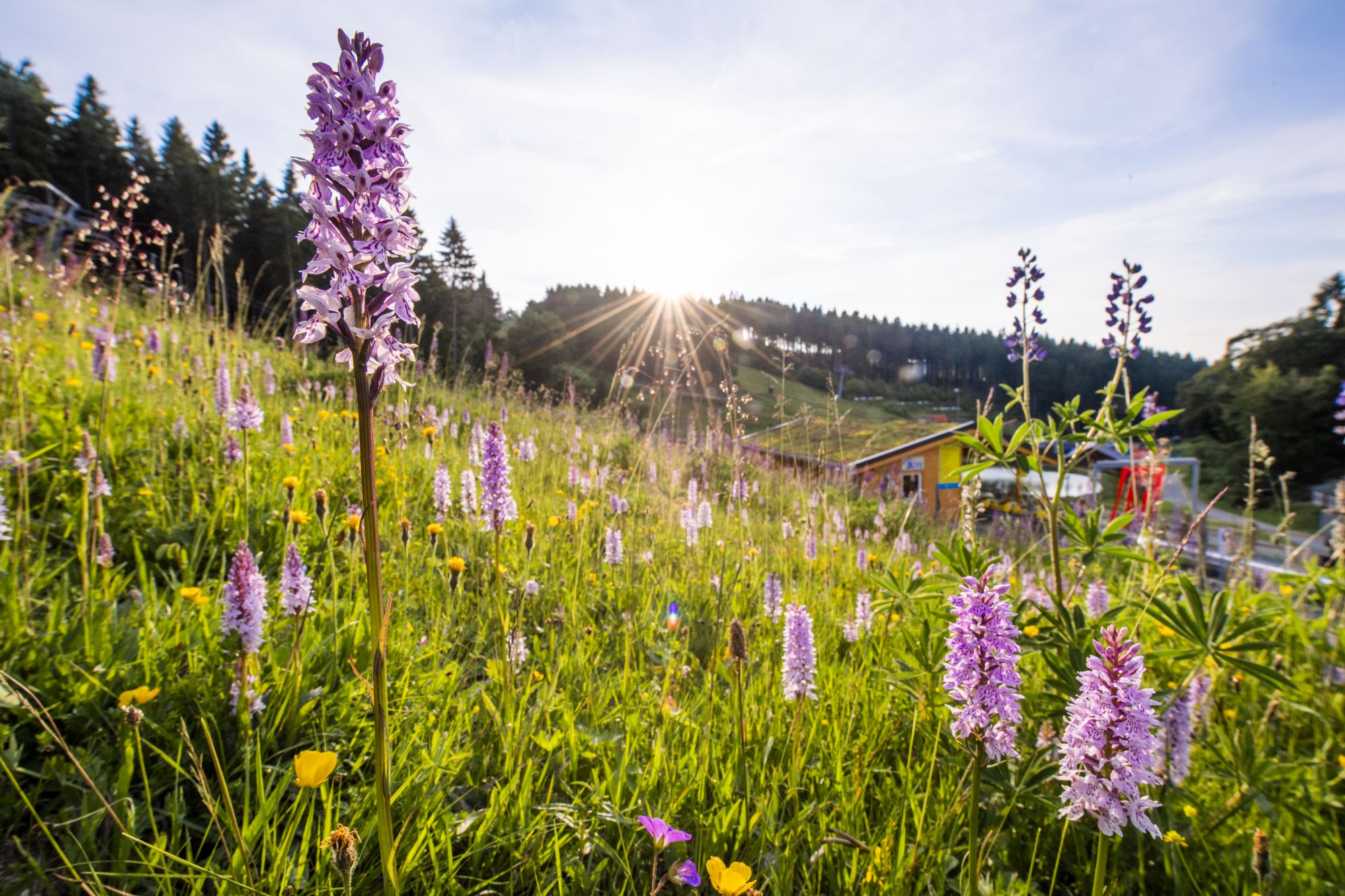
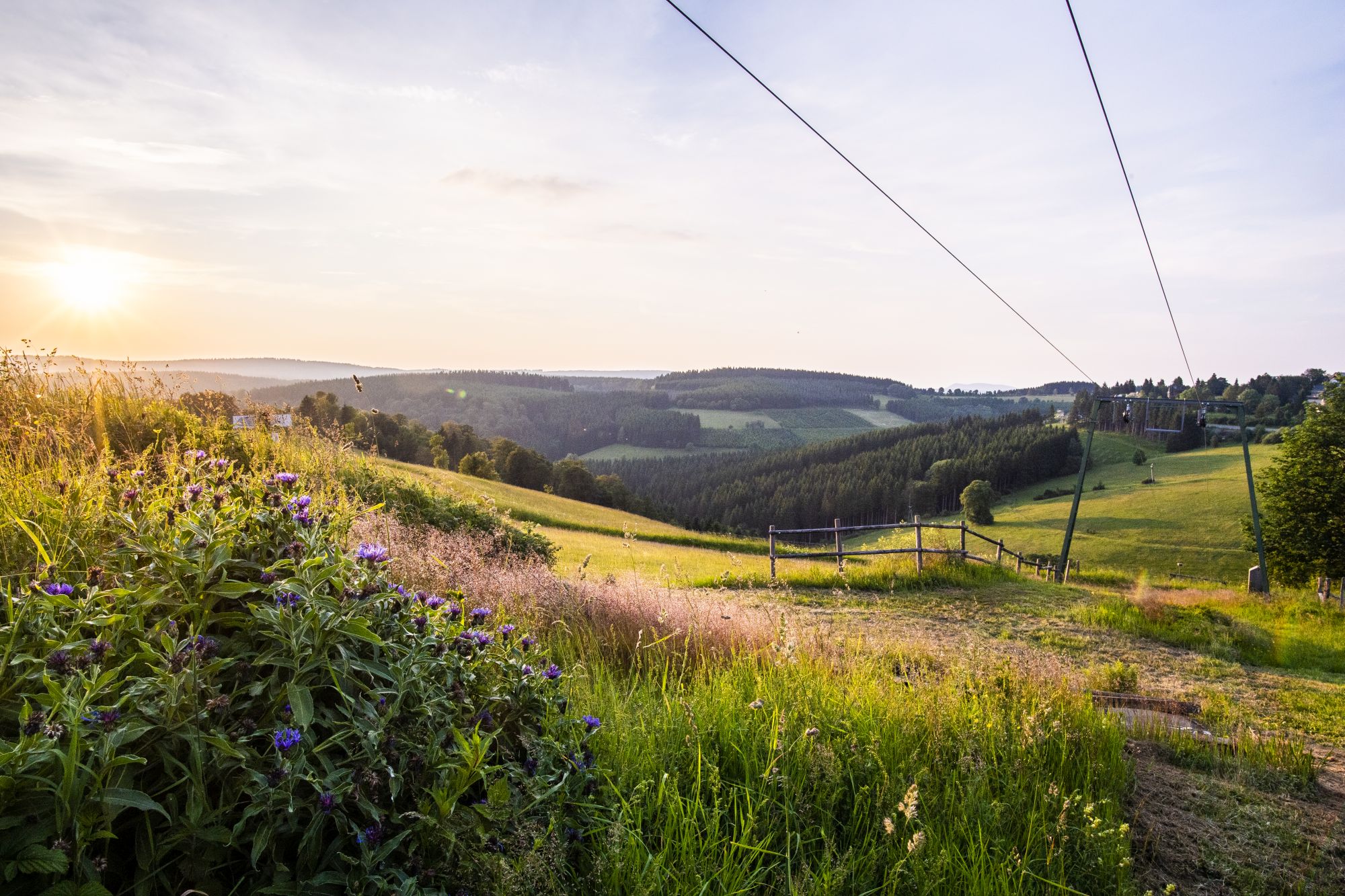
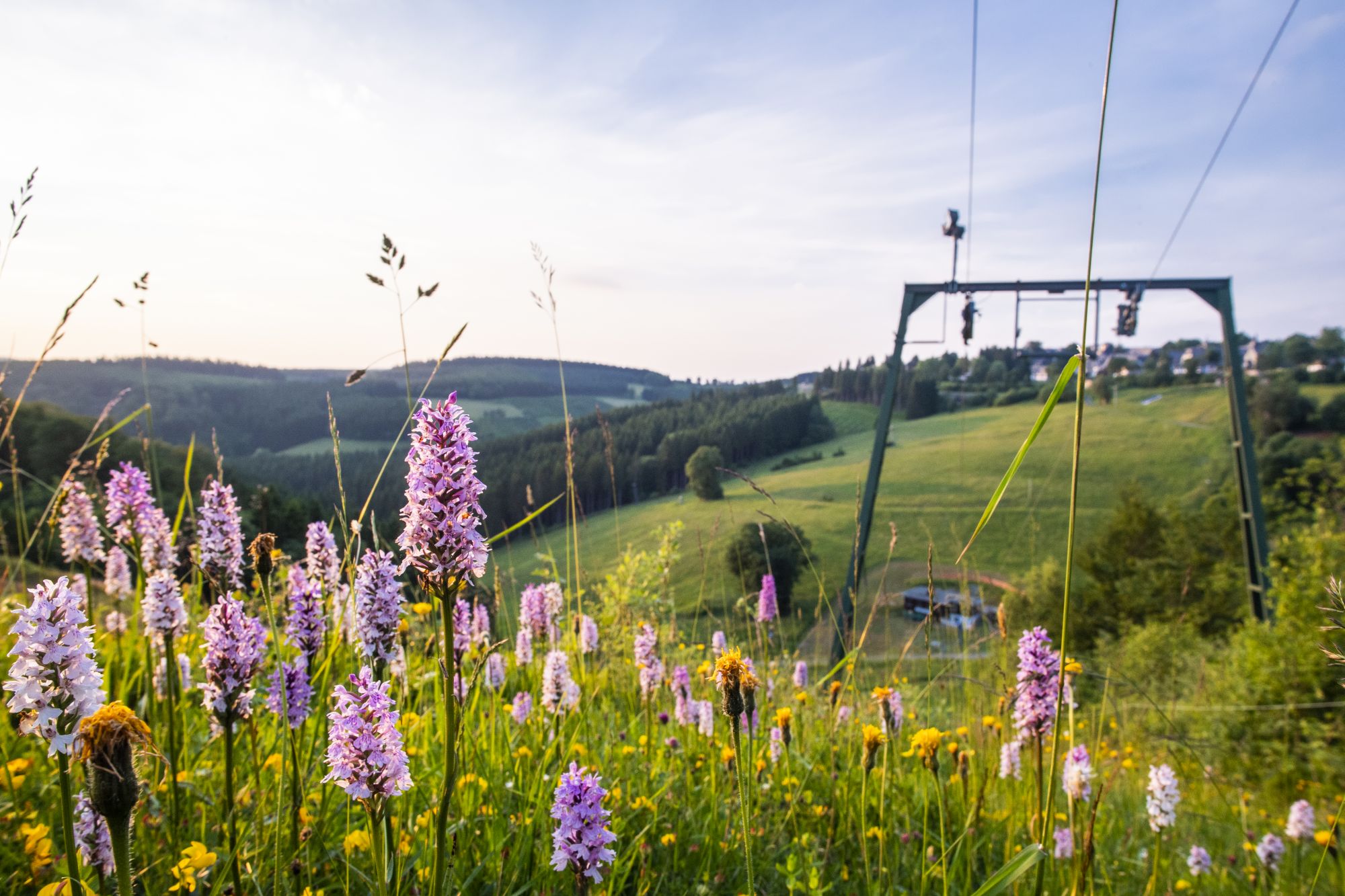
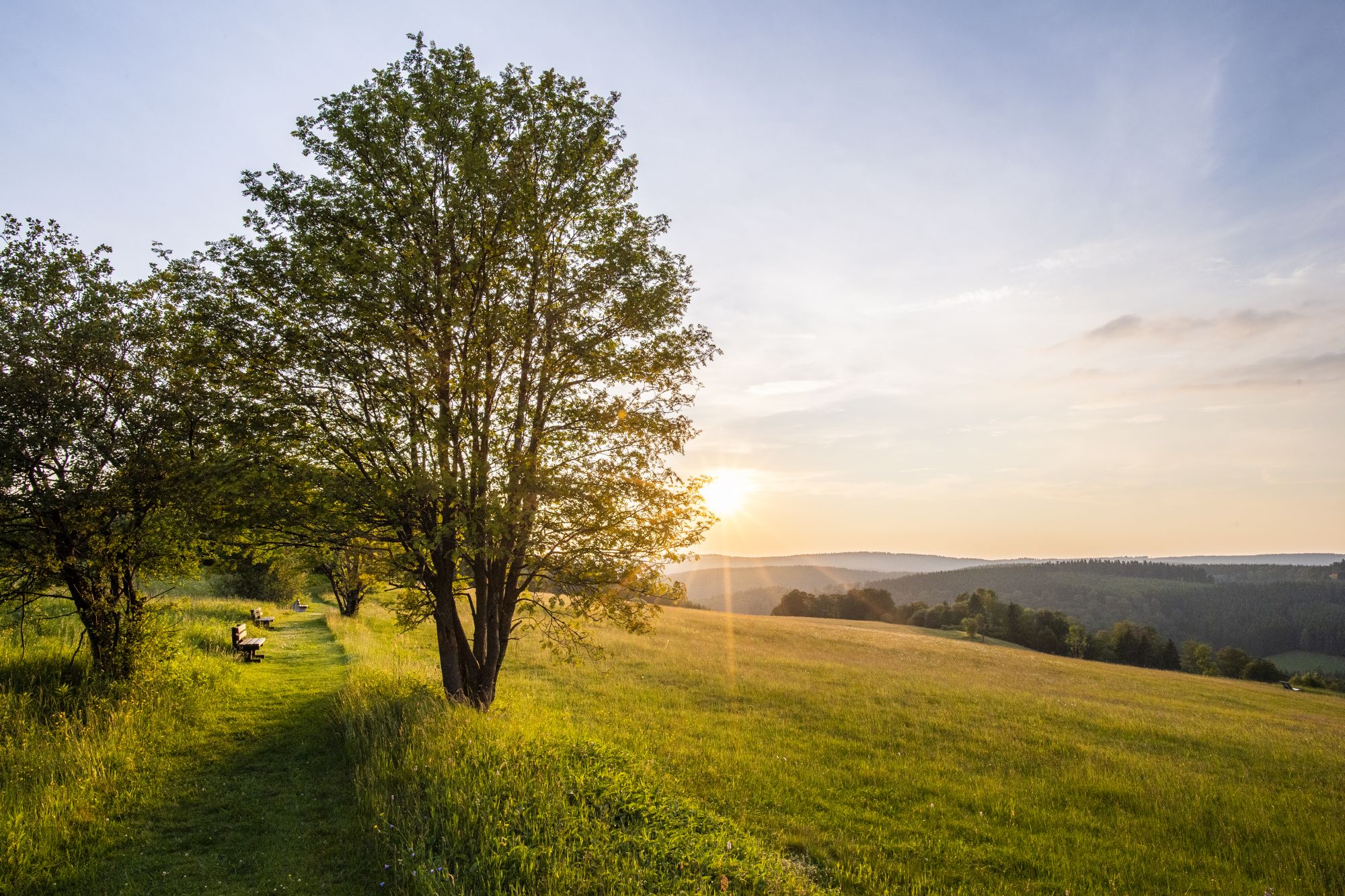
A valuable habitat in summerWhat is used as a ski slope in winter becomes a valuable habitat in summer. The mountain meadows in the ski resort are home to a remarkable variety of plants – according to Skiliftkarussell, 56 per cent of the plant species found there are on the North Rhine-Westphalia Red List.
To preserve this diversity, the land is farmed using low-intensity methods. The first mowing does not take place until late in the summer, and no fertiliser is used. This helps maintain conditions in which even rare and endangered plant species can thrive. Additional areas of vegetation are created through green roofs in the ski resort.
Slope maintenance
The best conditions for your day’s skiingWhen the lifts close, work begins on the slopes: 11 large snow groomers ensure that the runs are perfectly groomed again by the following morning. Seven of these are winch-driven snow groomers, which can also be used on particularly steep slopes. Together, the vehicles can groom up to 250,000 m² per hour.
Snow depth measurements accurate to the centimetre show where there is sufficient snow and where additional snow needs to be made. This allows snow to be produced in a targeted manner – and reduces the energy consumption for snowmaking by around 10 per cent. When fresh snow falls, the snow groomers are also deployed in the early hours of the morning, as well as before the slopes are opened under floodlights.
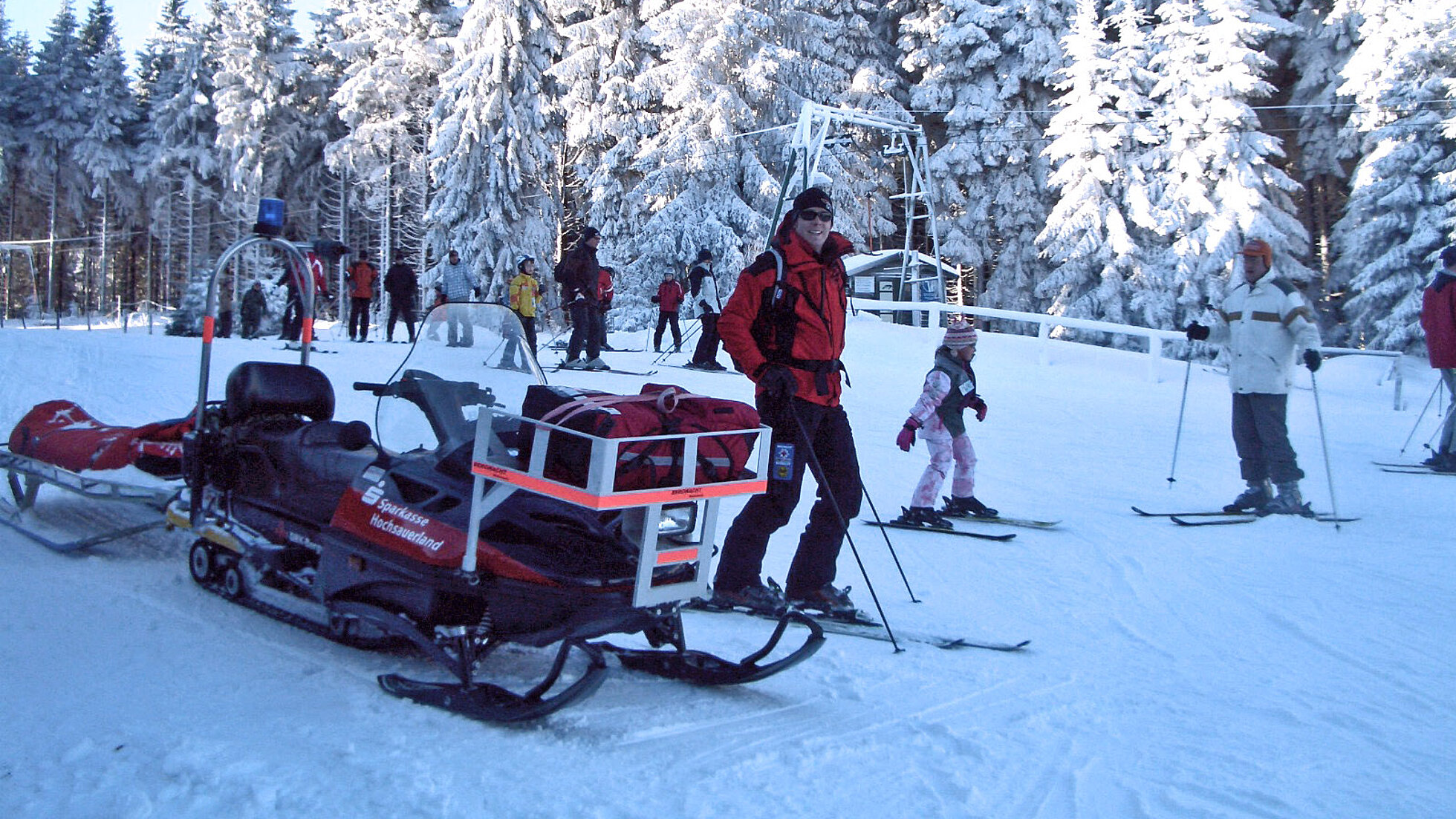
If anything happens on the slopes, the Bergwacht and the DSV-Skiwacht at the Skiliftkarussell Winterberg are on hand. They provide first aid and ensure that injured people are safely removed from the slopes. Their duties include rescue on the slopes, mountain rescue and cross-country ski trail rescue, as well as evacuating people from chairlifts and cable cars.
In an emergency: 112
If you’re involved in an accident or a fall, or if you witness an accident, you can call 112 to request assistance.
FIS rules
Staying safe together on the slopesEvery skier and snowboarder must behave in such a way that they do not endanger or cause harm to others.
All skiers and snowboarders must ski or snowboard within the limits of their visibility. They must adapt their speed and manner of skiing or snowboarding to their ability and to the terrain, snow and weather conditions, as well as to the volume of traffic.
Skiers and snowboarders approaching from behind must choose their route in such a way that they do not endanger skiers and snowboarders ahead of them.
You may overtake from above or below, from the right or from the left, but only at a distance that leaves the skier or snowboarder you are overtaking sufficient space for all their movements.
Any skier or snowboarder who is about to start a run, set off again after stopping, or turn or ride uphill must check both uphill and downhill to ensure that they can do so without endangering themselves or others.
All skiers and snowboarders must avoid lingering unnecessarily in narrow or blind spots on a run. A skier or snowboarder who has fallen must clear such a spot as quickly as possible.
A skier or snowboarder ascending or descending on foot must use the edge of the run.
All skiers and snowboarders must observe the markings and signage.
In the event of an accident, every skier and snowboarder is obliged to provide assistance.
Every skier and snowboarder, whether a witness or a party involved, whether at fault or not, must provide their personal details in the event of an accident.